The Big Plastic Count
Client: Everyday Plastic
Campaign: The Big Plastic Count
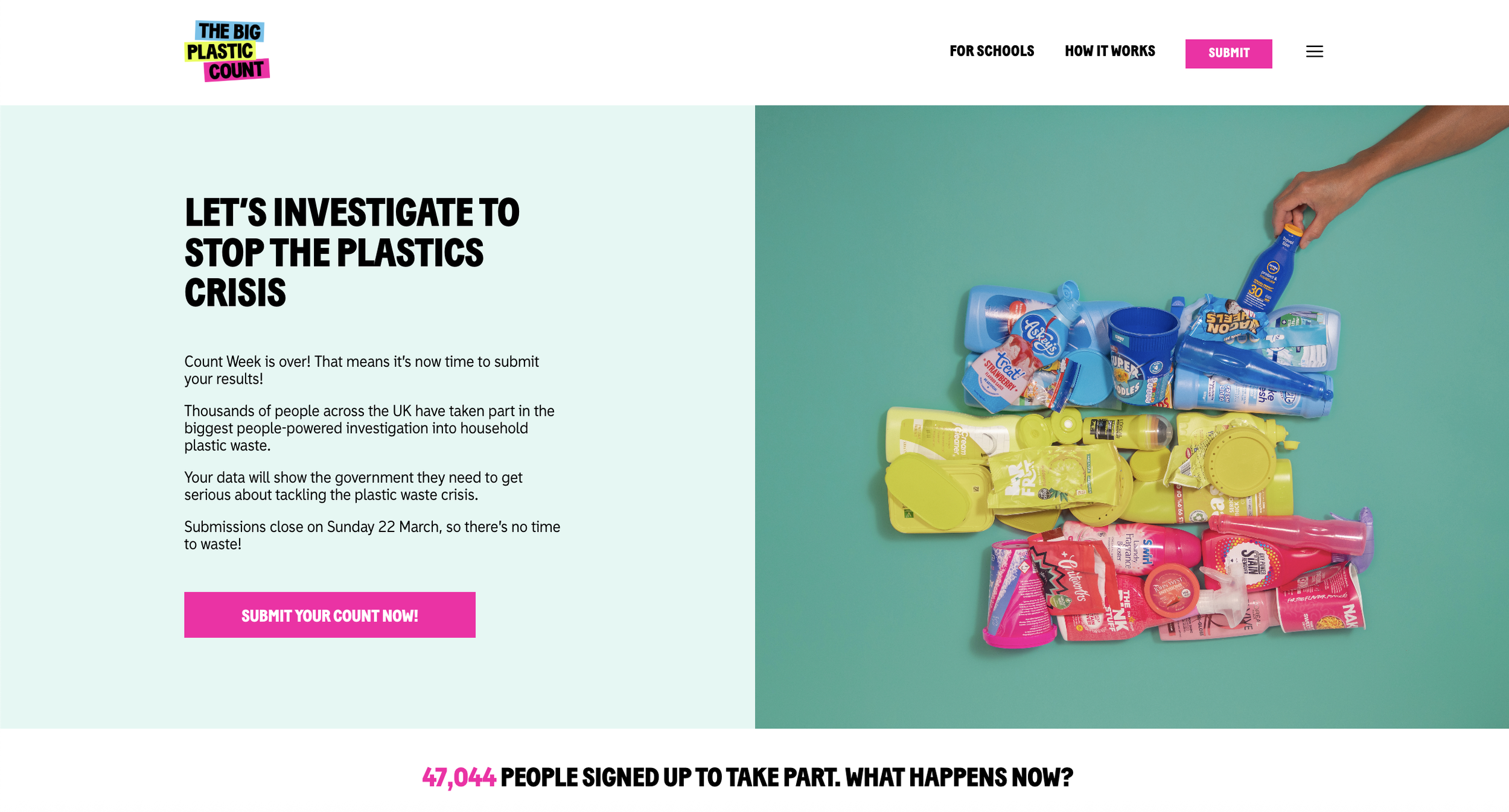
Brief: Refresh the identity, website and campaign design for TBPC – the UK’s biggest people-powered investigation into plastic waste – while rethinking how environmental campaigns can be designed to be more intersectional, accessible, inclusive and participatory.
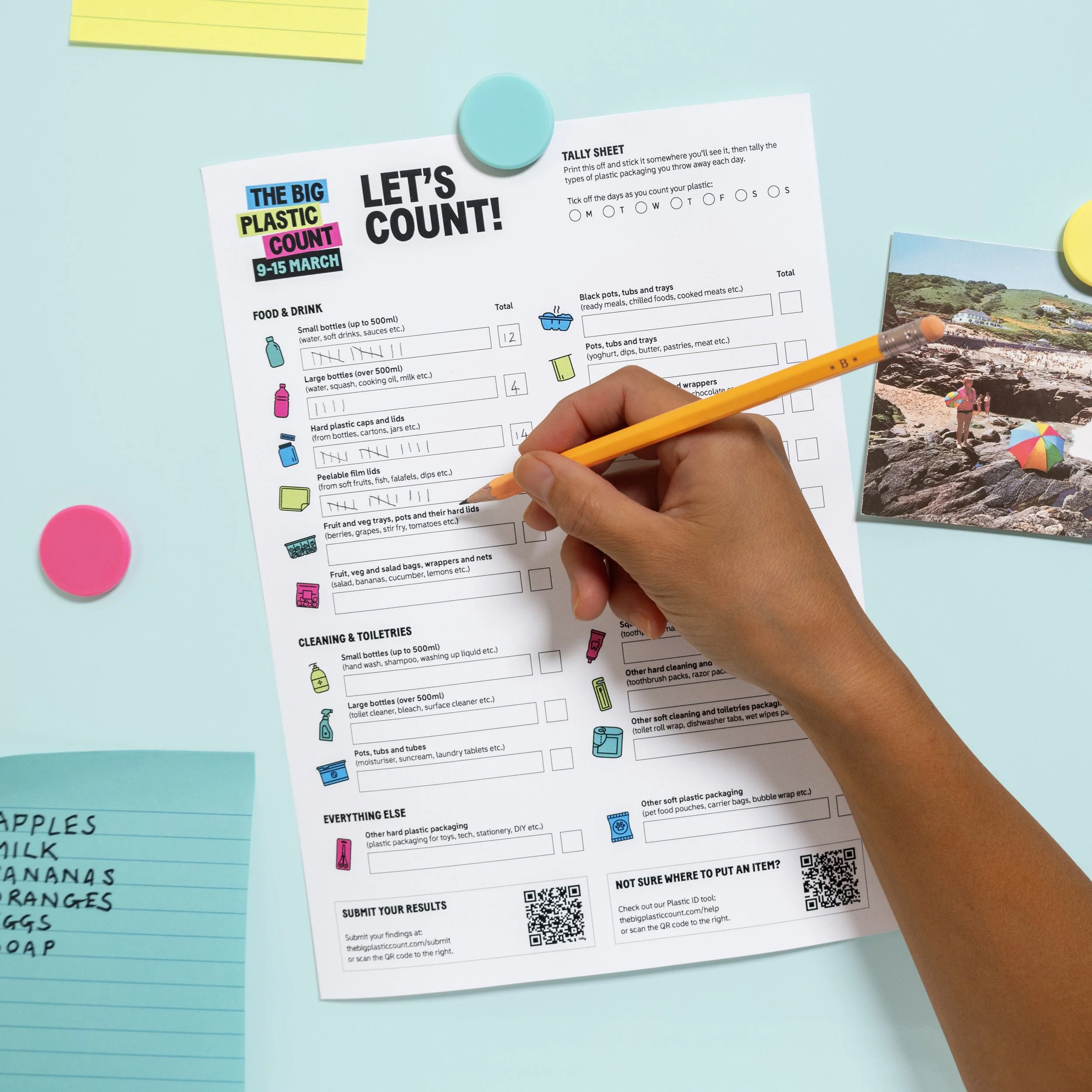
The Big Plastic Count is a nationwide citizen investigation into plastic waste, led by the charity Everyday Plastic. Each year, tens of thousands of households, schools and community groups across the UK count the plastic packaging they throw away over the course of a week. Over 250,000 people have taken part in The Big Plastic Count since 2018, helping generate evidence used to challenge the UK’s plastic system and push for policy change.
For the 2026 campaign, we used the opportunity to rethink the role design plays in civic participation.
If the goal of the campaign is to invite people to question where their plastic goes – and to challenge a system that isn’t working – then the design has to make participation feel possible.
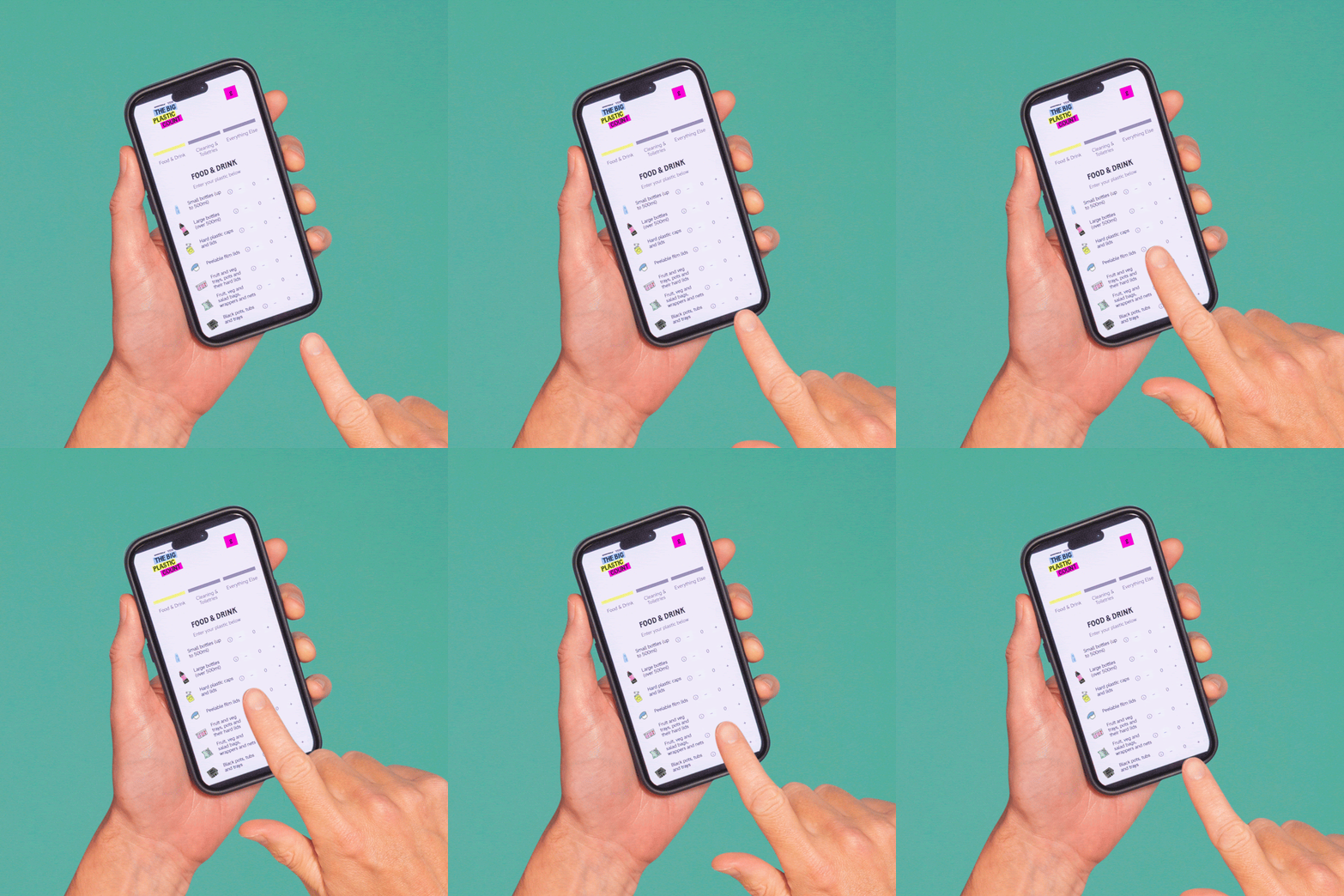
Accessibility became the starting point, not an afterthought. The identity, website and campaign tools were rebuilt with clarity, warmth and participation in mind.
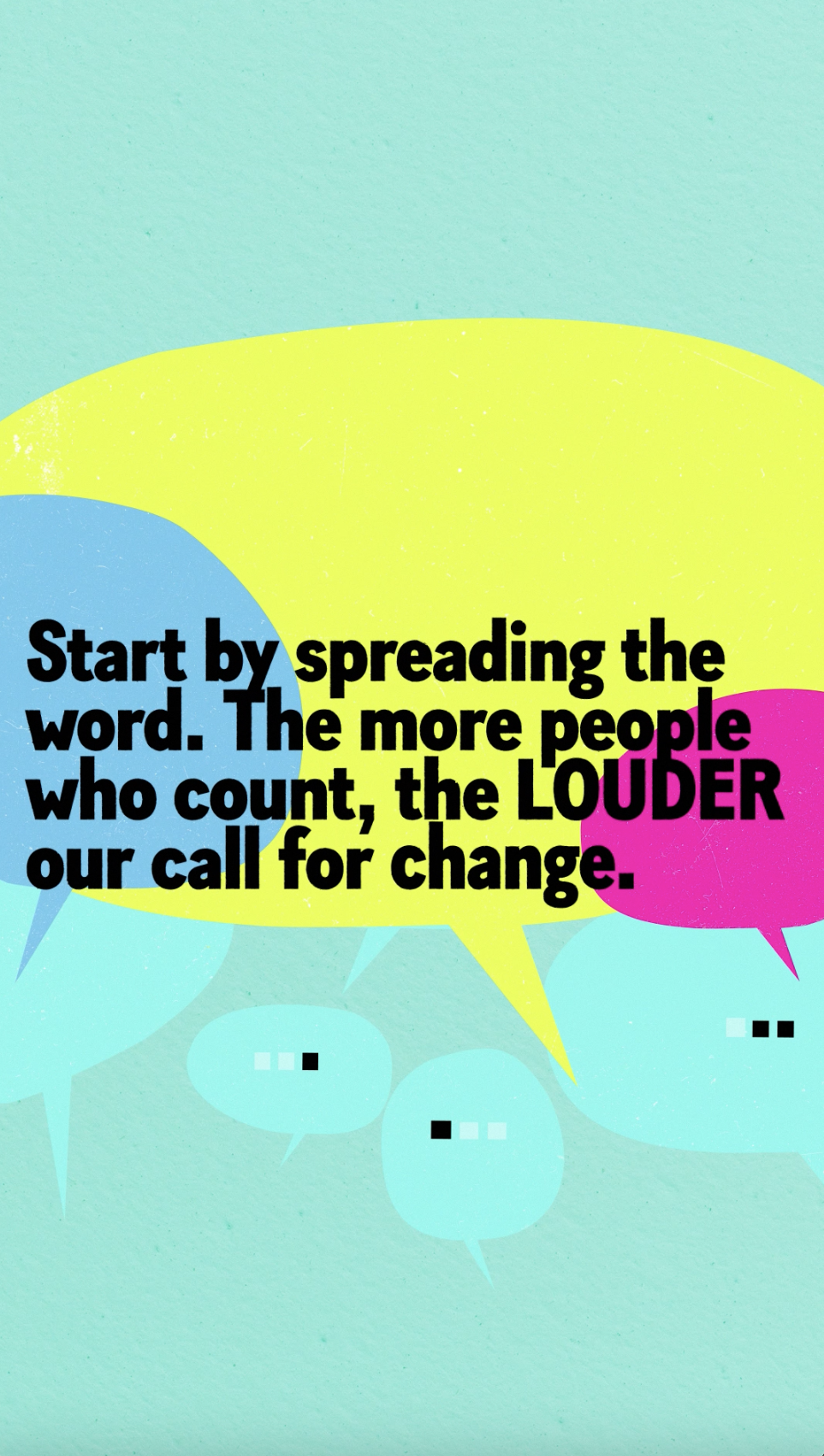
Typography prioritises legibility. Language avoids jargon. Motion and illustration explain complex systems in simple, human ways. The website was rebuilt with accessibility principles at its core, ensuring the campaign could be navigated by as many people as possible.
Design here isn’t just communication – it’s participation infrastructure.
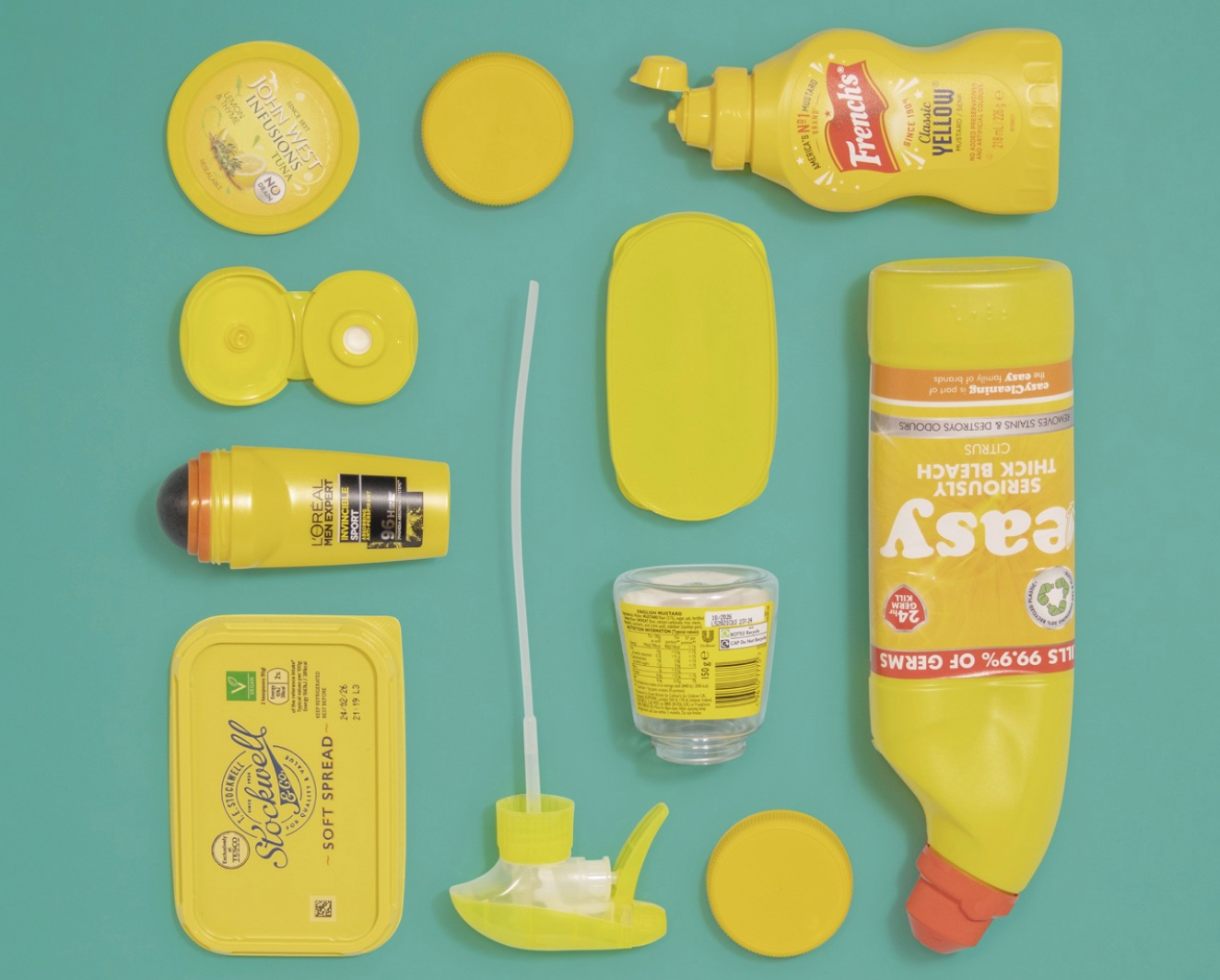
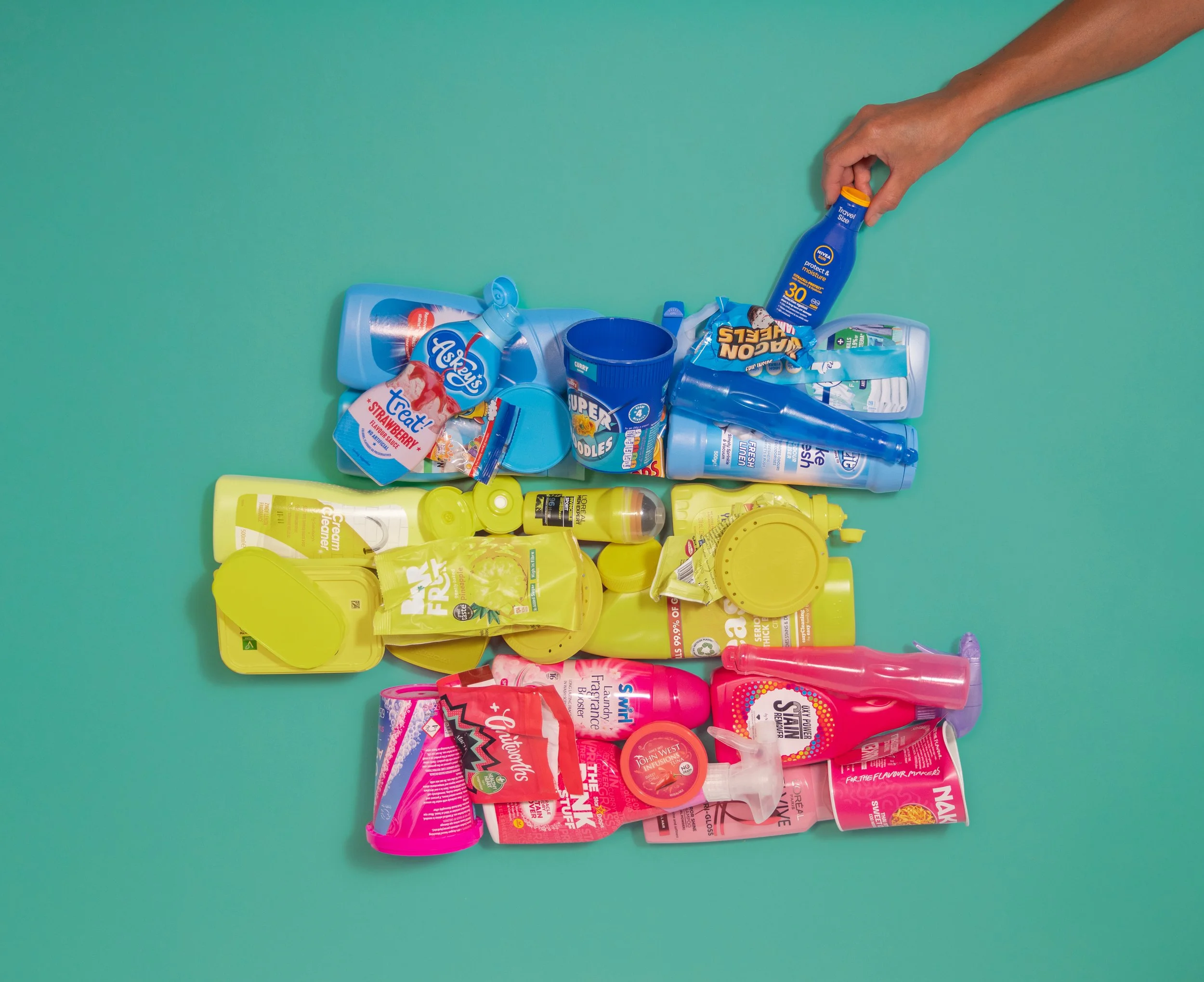
Photographer Matte Cooper’s all in-camera campaign imagery intentionally references TBPC’s Founder, Dan Webb’s, original flat-lay photography from the early days of the campaign, using recognisable everyday brands.
This maintains continuity with the project’s grassroots origins while evolving the visual language.
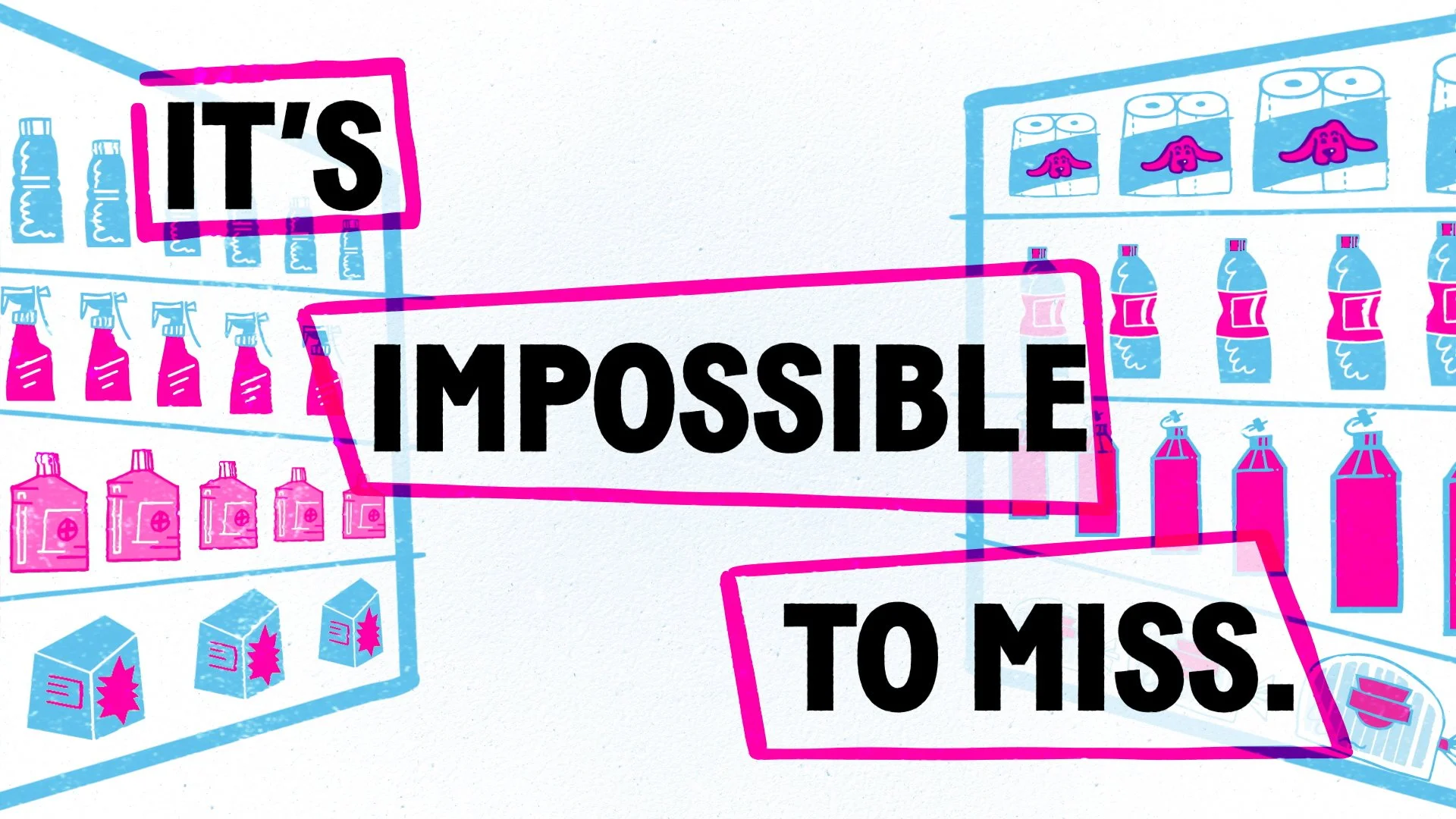
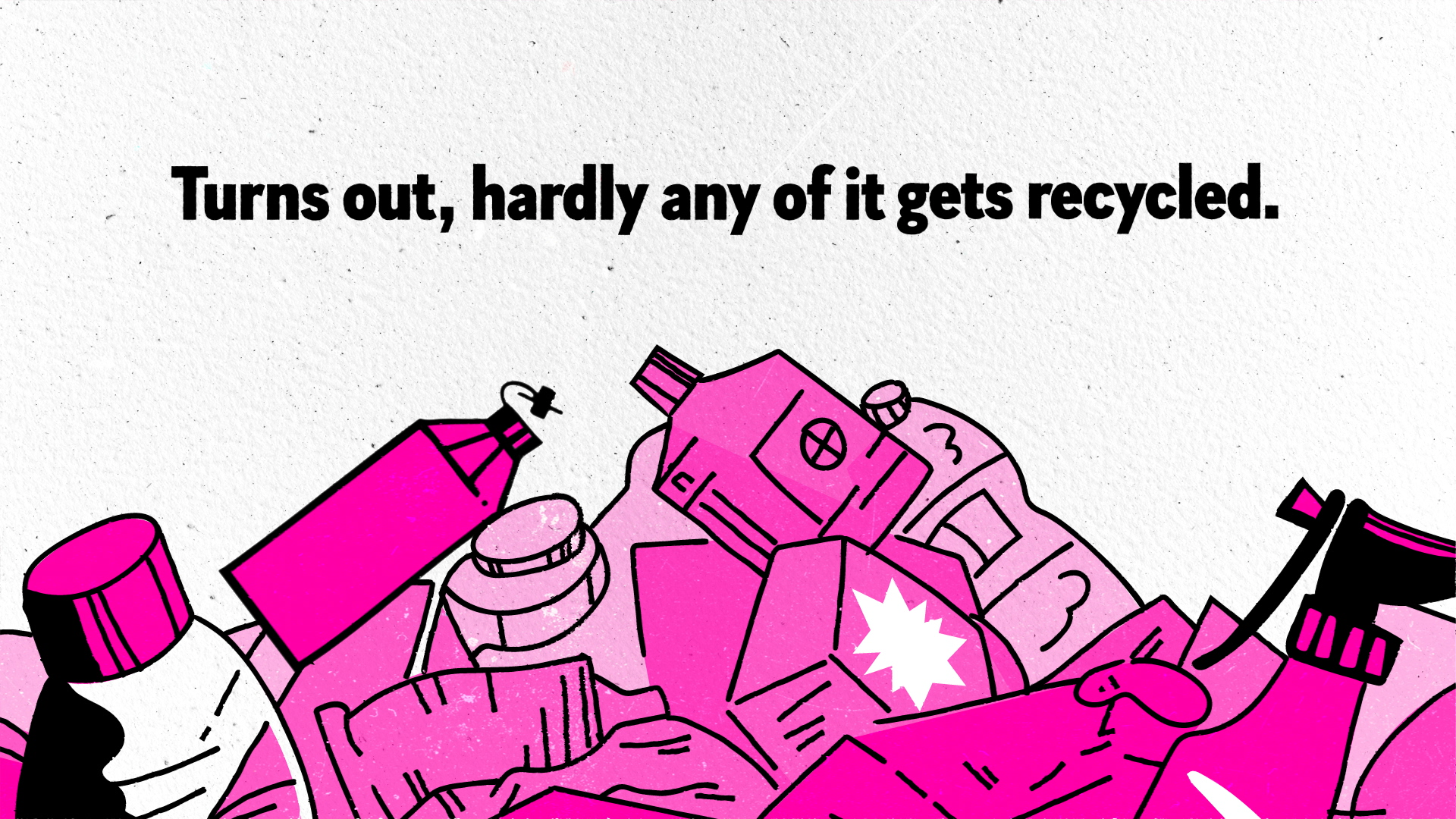
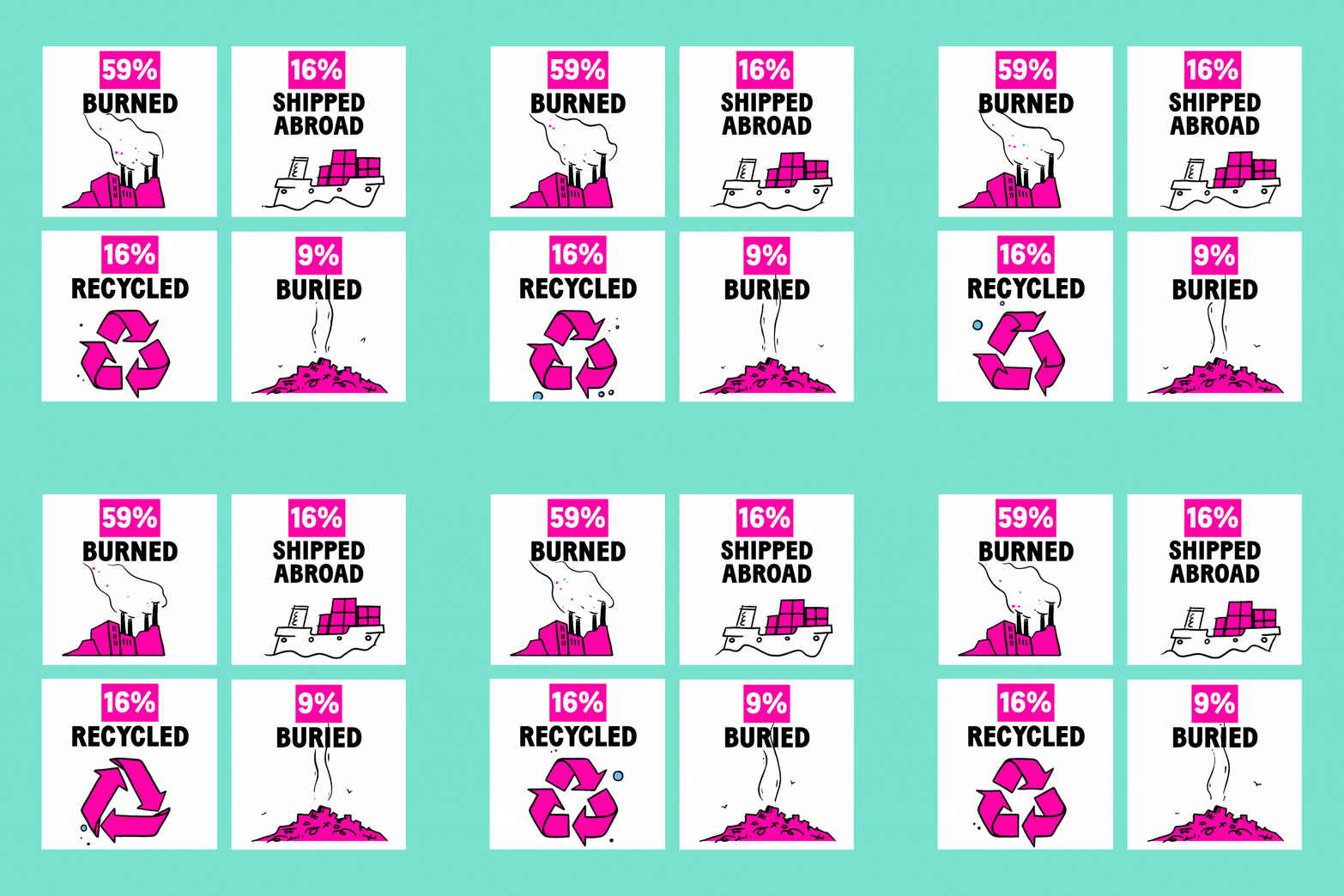
Illustrator and director Dylan White developed a highly recognisable visual language that runs through the campaign films and supporting materials. Bottles, incinerators, food packaging and recycling symbols appear as sketches – familiar objects drawn in a human hand.
The tone is intentionally playful, even joyful. Plastic pollution is a serious issue, but participation is sustained by curiosity, humour and collective action.
Alongside the creative work, the campaign was co-developed with Delivery Partners and Advisory Groups across the UK, working with communities whose voices are often missing from environmental conversations.
Because the plastics crisis isn’t experienced equally. Communities already facing inequality are always those most affected by environmental harm.
Designing for accessibility isn’t a compromise. In civic work like this, it’s where the strongest ideas begin.